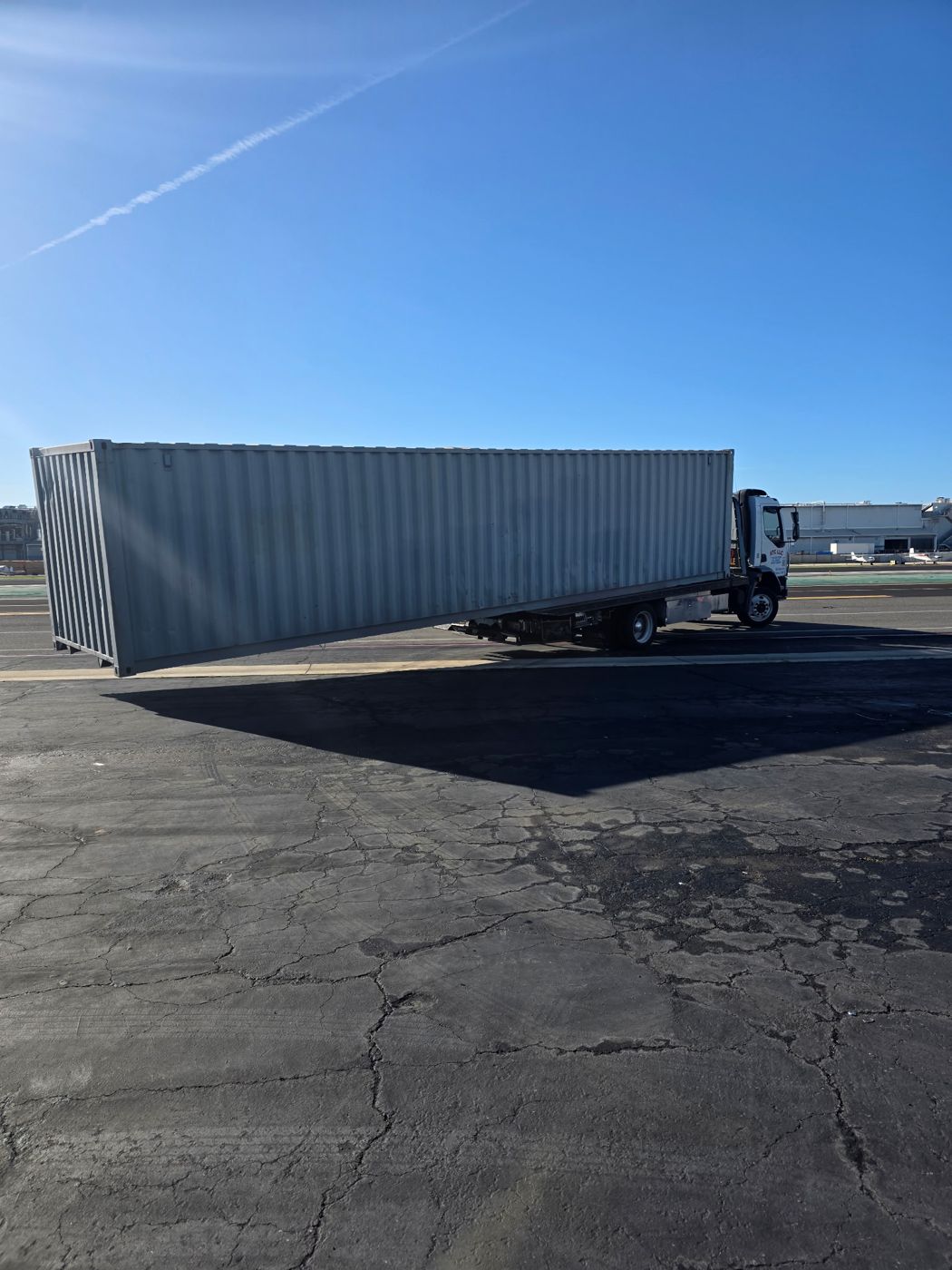
Shipping containers make great storage, job site offices and workshops, but delivery day only goes smoothly if the site is ready. Here's how tilt-bed delivery works and what to check before the truck arrives.
How tilt-bed delivery works
We move containers on tilt-bed rollback trucks. When we reach your site, the bed tilts back and the truck slowly pulls forward while the container slides off the rear and settles on the ground. You don't need a crane or forklift.
Because the truck pulls forward as it unloads, the site needs straight, open space in front of the drop spot as well as the spot itself.
Space you will need
- Length: Plan for a clear, straight run of roughly twice the container's length for the truck to unload. A 40 ft container needs a lot more room than a 20 ft.
- Width: Give the truck a few extra feet on each side of the container.
- Height: When the bed tilts, the front of the container rises high. Look for power lines, tree branches, eaves and carports above the drop area.
Ground conditions
The container should sit on firm, level ground. Concrete, asphalt and compacted gravel work best. Soft dirt and grass can let the container sink and twist over time, which can make the doors hard to open. Many people set railroad ties or concrete blocks under the corners.
Decide on door direction
Know which way you want the doors to face before we arrive. The direction is set by how the truck backs in, so it is hard to change once the container is on the ground.
Check permits and rules
Some cities and HOAs restrict containers on residential lots or need a permit for long-term placement. Check with your city before delivery day.
Moving a container you already have
We also relocate containers on the same property, move them between job sites and haul them away. Empty containers are the safest to move, so plan to unload it first.
Book your container move
Anytime Towing moves 20 ft and 40 ft containers throughout Anaheim and North Orange County. Call (714) 844-0919 with your pickup and drop-off addresses.